How to Choose a Safe and Licensed Crypto Casino UK in 2026: My Player's Guide
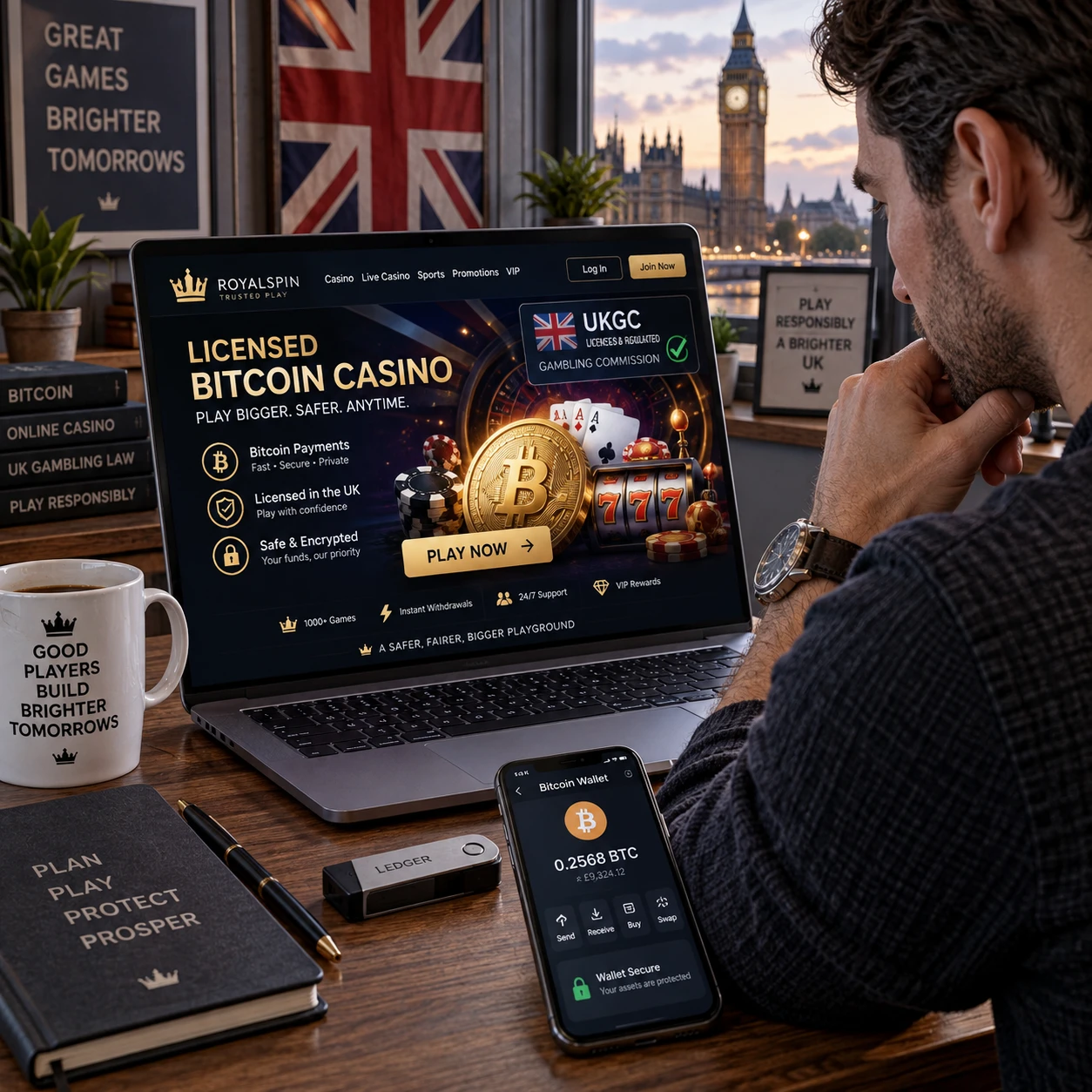
I'll be honest — when I first started poking around Bitcoin gambling here in the UK, I was genuinely surprised by how far things had come by 2026. Mates of mine kept going on about crypto payouts landing in minutes, the extra privacy, and provably fair games you just don't get at the old-school sites. I get the appeal. I really do. But I've also seen the other side — flashy, unlicensed platforms that look brilliant right up until your withdrawal mysteriously gets 'stuck'. That's the whole reason I put this guide together: so you can spot a genuinely safe, legitimate crypto casino and enjoy it without taking daft risks.
What Is a Crypto Casino and How Does It Work?
At its core, a crypto casino works a lot like any other online casino — except you're funding your account with digital coins instead of a debit card or bank transfer. You create an account, head to the cashier, copy the casino's wallet address for Bitcoin, Ethereum, Litecoin or a stablecoin like USDT, then send the funds from your own wallet. Withdrawals work in reverse: paste in your wallet address, and the casino broadcasts the payment on the blockchain. Simple enough once you've done it once.
What really sets the good ones apart in 2026, though, is the tech underneath. Most reputable Bitcoin casinos now run provably fair systems. In plain English — every spin, card shuffle, or dice roll can be independently verified using cryptographic hashes. You're not just taking their word for it when they say a game's fair. You can actually go check it yourself. Add smart-contract payouts on some games and public transaction records into the mix, and you've got a level of transparency traditional RNG certificates never quite managed.
Crypto Casinos vs Traditional Online Casinos
I've played plenty on both sides, so here's my honest take on the difference. Speed-wise, crypto usually wins hands-down. A UK bank withdrawal from a fiat casino can still drag on for 1-3 working days, but a Bitcoin or Solana withdrawal often lands in under 30 minutes once it's been approved. Fees tend to be lower too — especially if you stick to low-fee networks like Litecoin, Tron, or Polygon instead of congested Ethereum.
Privacy's another big draw. You don't need to hand over card details, and plenty of crypto platforms only ask for an email to get going — though any UK-licensed site will still want ID verification eventually, and honestly, that's a good thing. On game variety, the gap's basically closed. In 2026, top crypto casinos run thousands of slots, live dealer tables from Evolution and Pragmatic Play Live, plus crypto originals like Crash, Plinko, and Mines. The one real trade-off? Crypto prices move. A £200 win in Bitcoin could be worth a bit more — or a bit less — by the time it actually hits your wallet.
Is Crypto Gambling Legal in the UK?
This is the question I get asked most, and it trips people up constantly. Yes, you can gamble online in the UK — but the operator needs a licence from the UK Gambling Commission if it wants to advertise to or actively target UK players. That rule applies whether they're taking pounds, Bitcoin, or seashells, frankly. The UKGC hasn't bothered issuing some separate 'crypto licence' — instead, it treats crypto as just another payment method, provided the casino still meets the usual rules on anti-money laundering, customer verification, fair games, and responsible gambling.
So what does that mean in practice for 2026? If a Bitcoin casino is genuinely legal for UK players, it'll proudly display its UKGC licence number in the footer, run proper KYC checks, participate in GAMSTOP, and link out to BeGambleAware. If it accepts UK players but is only licensed in Curacao or Costa Rica while dodging all that — it's operating in a grey area, at best. You might still be able to deposit. But you'll have very little protection if something goes wrong.
Understanding UKGC Licensing for Crypto Platforms
A UKGC licence is more than just a logo stuck in a footer. For a crypto platform, it means the UKGC has actually vetted who owns the company, where player funds sit, how games get tested, and how complaints get handled. Licensed operators have to keep player balances in segregated accounts, submit their RNG and provably fair systems to independent labs like eCOGRA or GLI, and report suspicious transactions under UK AML rules.
Before I deposit a penny anywhere, I always scroll down to the bottom of the homepage, copy the licence number, and check it directly on the Gambling Commission's public register. Takes about 60 seconds. If the name doesn't match, the licence is suspended, or there's no number at all — I'm gone. No bonus is worth that risk, not one.
Key Signs of a Safe and Trustworthy Crypto Casino UK
Over the years I've built myself a bit of a mental checklist, and it hasn't let me down yet. First — valid licensing. UKGC for UK play, ideally backed by an extra reputable licence like Malta for good measure. Second, proper SSL encryption and 2FA logins. You should see that little padlock in your browser and get offered Google Authenticator or similar in your account settings.
Third, transparent terms. I actually read the T&Cs — withdrawals, dormant account fees, bonus rules, the lot. Safe sites write them in plain, clear English (not legal soup). Fourth, audited fairness — look for provably fair badges you can click to verify, plus certificates from independent testers. Fifth, responsive support. I always test live chat with a quick question about minimum withdrawals before I deposit anything. Get a copy-paste bot answer twenty minutes later? That tells me everything I need to know. And finally — real player reviews on independent forums and Trustpilot, not just the cherry-picked testimonials sitting on the casino's own page.
When I'm comparing new sites, I like having a reference point to measure them against. Checking a dedicated crypto casino uk resource that focuses on UK players helps me see what good actually looks like — clear licence info, realistic bonus terms, supported coins like BTC and ETH, and proper responsible gambling tools in place. That way I can quickly tell if another platform falls short of those industry safety standards.
Red Flags to Watch Out For
If you spot any of these, be very cautious:
- No licence details or fake badges: Vague phrases like 'fully licensed and regulated' with no number or link.
- Unclear ownership: No company name, address, or registration details anywhere.
- Delayed or capped withdrawals with excuses: Endless 'manual review' or sudden new verification demands only when you win.
- Excessive bonus restrictions: 70x wagering, £5 max bet, 7-day expiry, and half the games excluded — buried in small print.
- Pressure tactics: Pop-ups urging you to cancel a withdrawal for a 'special VIP bonus'.
I've learned to trust that gut feeling by now — if something on a site feels a bit off, it usually is, and it's rarely worth sticking around to find out why. Do the boring checks first: licence number, T&Cs, a quick chat with support. It takes ten minutes, maybe less, and it's the difference between a decent night of play and chasing a withdrawal that never quite arrives.